
Everyone who knows me will know that Doctor Who has been one of my biggest special interests for the past two decades, and even through the Moffat era (sorry), questionable writing, and really silly bits which make me question what the hell I’m watching (everyone knows exactly what I’m referring to here), I have stayed put because I love it. I love it and it will always give me an unexplainable sense of comfort which no one can deny comes from the show’s feel good nature and classical aspects that haven’t run away no matter what season we’re on or silly skit they’re doing to give it a revival. Doctor Who is my security blanket.
Ncuti Gatwa and Modern Who
Now. No matter what you have to say about Ncuti Gatwa I think he’s bloody brilliant. He’s taken on the role of The Doctor with a really fun vibe, but the glint of trauma behind his eyes is never lost on him. I think he’s picked it up perfectly and this fashion-forward, queer-esque spin is the modern Doctor we never know we needed (and i’m not a ‘modern Doctor’ fan. I sulked forever when Matt Smith took over Tennant’s role)… and I think it’s being written perfectly into the show; we’re suddenly getting modern with 10′s writing and sometimes it doesn’t quite feel like we’re in a new era, which is where this leads me… The Well. Season 2, Episode 3. SPOILERS BEYOND THIS POINT.
The Episode – The Well
The Well was a continuation of a very old story in the Doctor Who tale book… Midnight. Now, I can barely watch Midnight myself, it terrifies me that much! I’ve always found it a really creepy one, so I had fear watching this one. This episode, I was engrossed, the most I have been in a long time – it really was brilliant (not to quote Jodie Whittaker!). But I never expected them to reopen that story book… and they left it open, too! So I am scared myself! But I can’t wait to see how it all pans out.
Though, that’s not what this blog post is all about – this blog post is all about the accessibility encountered in the episode as it got me thinking.
Accessibility
The episode The Well introduced the character Aliss Fenly, played by Rose Ayling-Ellis; she was the only character discovered alive on the diamond mining planet Planet 6 – 7 – 6 – 7 and was discovered to have shot her friend – the expedition colony had to determine why she was the only survivor of 35, led by Shaya Costallion (and the Doctor supported by Belinda (Varada Sethu). It is soon evident that there is an killing entity behind Aliss’s back that cannot be seen – one that The Doctor knows from his past on this very same planet when it was named something else – Midnight.
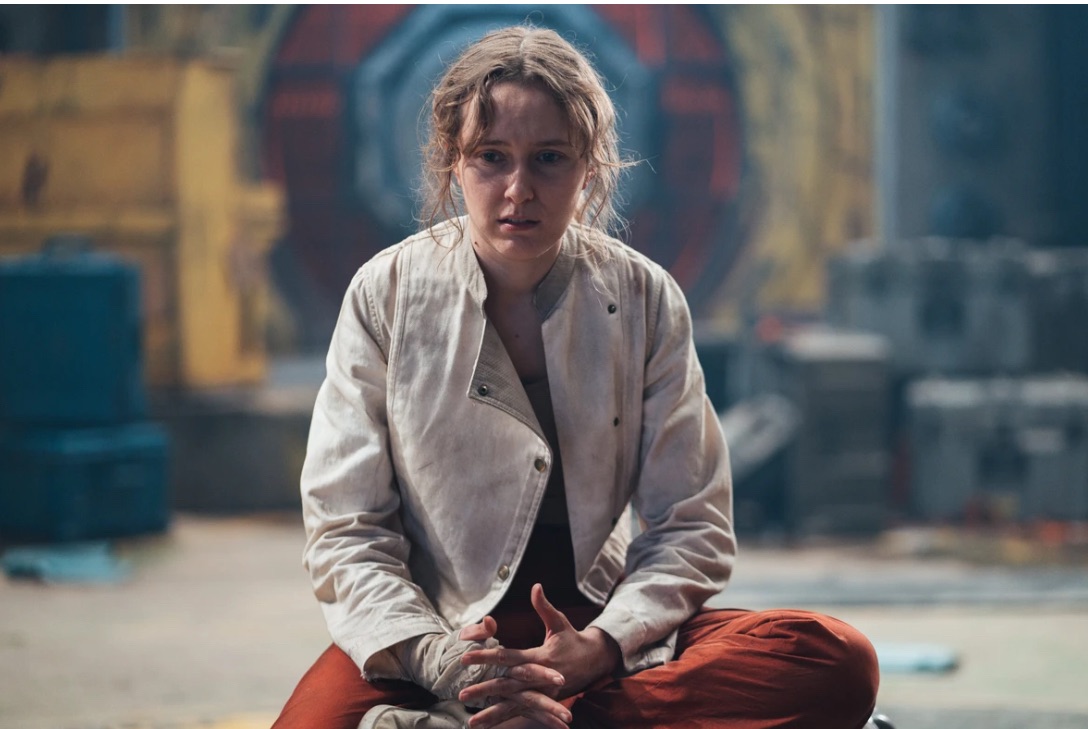
Aliss, like Ayling-Ellis herself, is deaf. It makes sense that a deaf person would portray a deaf character, right? (Though in media nowadays you do get a lot of abled people playing disabled people, which is awful – but I more meant it in the sense, she couldn’t suddenly be hearing). Hence, when they begun speaking to her, they begun speaking in sign language; I really hope they learned their sign language from a hard of hearing person – it’s vital that your sign is learned from someone who’s actually a part of the language and culture.
Anyway, as they signed, they also spoke, so the sign-speak was accessible to all, but something quite potent to me was at one point there was a moment where Aliss and The Doctor signed between themselves with no translation and Shaya made a comment about how all conversations had to be fully translated so ‘everyone can understand’ and it made me think how isolating it must be for deaf and hard of hearing folk when we are not signing, because not everyone can understand – they are excluded because of their disability and that’s an injustice.
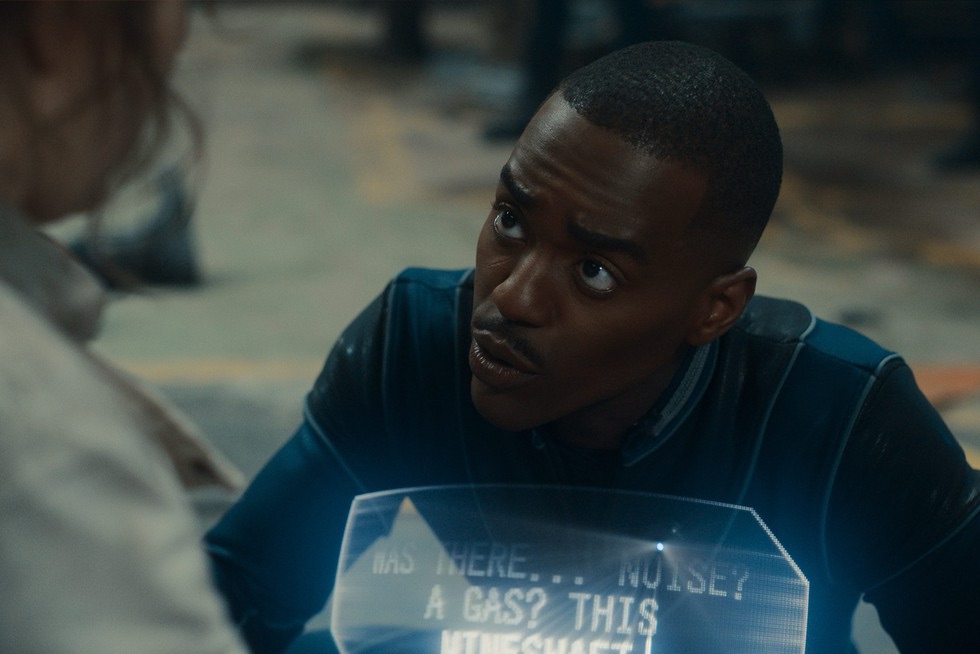
Doctor who also showed innovation when it came to accessibility. Bearing in mind this is set 500,000 years in the future so it’s a lot of concept and more CGI than substance, but the crew who dropped down on 6 – 7 – 6 – 7 presented with CC panels glowing across their chests; this meant that every time they spoke, it was presented in the form of a sentence in a lightbox on their suits (or lack thereof in the Doctor and Belinda’s case). This would be so helpful to anyone without BSL knowledge (or without knowledge of local or international dialects because this is a think, like in any language!), for people with only rough sign knowledge or not confident in their sign, anyone who struggles to pick it up, or accounting for other disabilities that could hinder your sign such as limb difference or amputation!
But.. They also consider ‘what can we do to make things easier for disabled people in the future’ by thinking about CCs, thinking, maybe that’s an easier form of communication people can fall back on across the board. This is a clever move from the writers, as it leaves the disabled community feeling heard, feeling listened to, however, it rightfully could cause an upset in the deaf community as it suggests the eradication of their language as it’s ‘no longer needed’ due to classical words however they have strong cultural ties to their language (BSL/ASL etc) and it will always be linked to their disability.
There is only so much I can say; I am disabled, but I am not hard of hearing, but I am able to interlink accessibility across the board to an extent and this is just what I picked up when I watched the episode so I chose to write.
Deaf community, I hope I did you justice – but I am all open to feedback no matter what.
See you soon!
 @holaurgraphic
Leave a comment